
Refractory Inspection
Total Refractory Solutions Ltd is an independent, owner-side refractory inspection consultancy. We are not an installation contractor, so the findings we give you carry no commercial interest in the repair scope that follows. That independence is the point: you get a defensible record of lining condition and installation quality that stands up in front of your insurer, your regulator and your contractor.
We work across refineries and petrochemical plants, energy-from-waste and biomass facilities, steelworks, cement kilns, glass furnaces and process heaters. We operate worldwide, mobilising to sites across the UK, Europe, the Middle East and beyond. Our lead inspector holds API-936 Certification 102187.
What refractory inspection covers
Condition surveys during outage
A full internal walk-down of the lining while the unit is down. We record hot-face loss, cracking, spalling, anchor exposure, hex-mesh and stud condition, joint failure, hot spots logged during the previous campaign, and any evidence of gas bypass behind the lining. Every finding is numbered from F-01 onward, located against unit drawings, photographed as a numbered plate, and graded on a four-point severity scale:
S1 – Immediate. Repair required before the unit returns to service.
S2 – Before next campaign. Deterioration that will not survive another run.
S3 – Monitor. Recorded, trended and re-inspected next outage.
S4 – No action. Noted for completeness; within acceptable tolerance.
That scale is what turns an inspection into a maintenance decision. Nothing is left as “some damage noted”.
Scope definition and control
We mark our proposed repair scope in red on the lining drawings and issue it to you for review. Only scope you approve, marked in green, is released to the installation contractor. Work outside the green-marked scope does not proceed without a documented variation. This single discipline is the most effective cost control available on a refractory outage, and it removes the argument at the back end about what was and was not authorised.
QA/QC surveillance of installation
Independent quality surveillance to API STD 936, 5th Edition (March 2024), the industry standard for inspection and testing of monolithic refractory linings and materials. Our surveillance covers:
Shell preparation and surface condition prior to lining
Anchorage type, layout, spacing and weld procedure qualification
Material identification, batch traceability, storage and shelf life
Water addition, mixing time, ambient conditions and workable life
Installed thickness, density and placement technique
Witness and hold points agreed with you before work begins
Test panel casting, curing and testing
Controlled cure and dry-out schedule, including thermocouple placement and hold verification
Final inspection, punch listing and sign-off
Gunned and pumped repairs receive the same treatment: shell preparation, anchorage, weld procedure, material and thickness verification, installation controls, hold points, curing and dry-out, then final inspection.
Assessment and fitness for service
Assessment of existing linings to API RP 982, 1st Edition (October 2023) – Inspection and Assessment of Refractory Linings. Where a lining is degraded but not failed, we give you a reasoned view on whether it will make the next campaign, what the failure mode would look like, and what monitoring would give you early warning.
Supporting survey techniques
Thermographic surveys – external shell temperature mapping on-line to locate hot spots, thinning and lining bypass before an outage is planned.
Drone inspection – internal and external survey of stacks, flues, vessels and structures where access is restricted or scaffold cost is disproportionate.
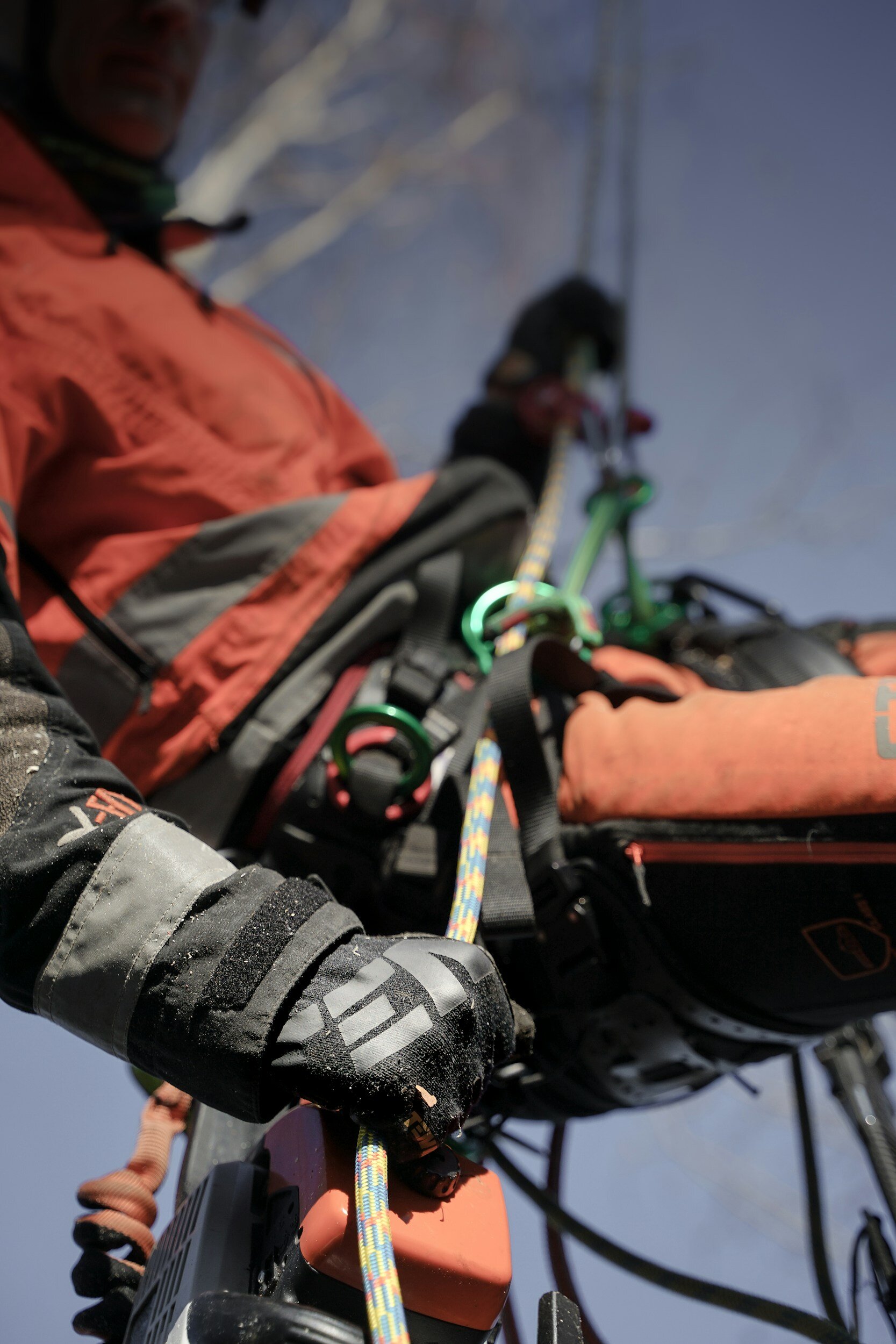
Rope access – IRATA-supported access for high-level and confined work.
Lining design and mapping – drawing-based mapping of lining types, thicknesses and anchor systems for units where the original records have been lost.
How we report
Reporting is split between the field and the office, deliberately. Inspectors record findings on standardised field sheets on site – no report writing at the workface, no reliance on memory after shift. Those records are consolidated into a controlled report by the office.
Every report carries a basis and limitations section stating what was inspected, what was not, the access available, the condition of the unit at the time and any constraint that qualifies a finding. You should always be able to see the edge of what the inspection covered.
Reports are issued as PDF for the client record, with the editable Word master retained so revisions and re-issues stay controlled. Photographic plates are numbered and cross-referenced to the finding they support.
Outage and turnaround resourcing
For planned turnarounds we resource to shift pattern rather than to a headcount that looks good on paper. A typical FCC unit scope runs two day-shift inspectors and three night-shift inspectors, with a nominated lead holding the scope drawings and the variation log. Inspectors are assessed against a documented competency framework covering API 936, API RP 982, confined space entry, working at height and the specific lining systems in the unit.
We are used to the tempo of a live outage: same-day findings, scope marked up overnight, and a defensible paper trail behind every decision. Our inspectors are available around the clock through an outage, and we take enquiries 24 hours a day.
Sectors
Refineries and petrochemical – FCC units, reactors, regenerators, cyclones, transfer lines and process heaters
Energy-from-waste and biomass boilers
Steel and non-ferrous
Cement and lime kilns
Glass furnaces and regenerators
Incineration and thermal treatment
Talk to us about your unit
Tell us the site, the unit, the lining system and the outage dates and we will come back with a resourced scope rather than a generic quotation. Drawings, previous inspection reports and photographs are always welcome. We work worldwide and answer enquiries 24 hours a day.
Total Refractory Solutions Ltd – 3 Quarry Bank, Liverpool – +44 (0)7940 904 443 – danielmcgrath@totalrefractorysolutions.com – API-936 Certification 102187 – Registered Company Number 14043379
Standards referenced: API STD 936, Refractory Installation Quality Control, 5th Edition, March 2024, and API RP 982, Inspection and Assessment of Refractory Linings, 1st Edition, October 2023 (api.org).


Let’s Work Together
We’re always looking for new opportunities and are comfortable working internationally. Please get in touch and one of our project managers will contact you about beginning the proposal process.